Will AI-generated photos get your menu rejected?
Yes, if the AI generated the food. DoorDash requires real photos of the actual item and bans "evidently AI-generated images" for virtual brands. In one restaurant account in September 2026, its review rejected 16 of 20 Gemini images. But DoorDash also ships its own AI photo tools. The line is whether the food itself changed.

Su Lee · Founder, MenuPhotoLab
10 min read · Sources last read · 12 sources
On this page · 8 sections
Read in another language
Does your photo say it was made by AI?
Many AI image tools, Gemini and ChatGPT among them, write a label into the file. Read yours, and check its size for DoorDash, Uber Eats and Grubhub, in a few seconds. The photo stays on your device and nothing is uploaded.
Drop a photo here, or choose one from your phone or computer.
What do the platforms actually reject?
DoorDash publishes eleven rejection reasons. The one that matters here is "photo is not representative of the item": the photo must show "exactly what is included", reflect "the actual item served, not an idealized or generic version", and be one of the "real photos of your actual item". Alongside it sit the ones that catch most people: wrong size or resolution, too zoomed in or out, wrong framing or aspect ratio, poor lighting, problematic background, overlays or watermarks, people in frame, out of focus, copyright, and duplicates.
DoorDash's rules for virtual brands name AI directly:
Evidently AI-generated images, heavily altered images, or images that create a misleading representation of the item are not permitted.
The rule underneath all of them is the same. The photo has to show what the customer will actually receive. That is a representation rule, not a technology rule.
Uber Eats requires the item centered with nothing running off frame and no more than one item per photo. Grubhub requires food photos only, and checks copyright by looking for the image in a reverse image search, which is worth knowing if you are tempted to pull something off the internet.
How does DoorDash tell a photo was made by AI?
DoorDash does not publish how its photo review works. What I can show you is what happened in one restaurant account I work with, in September 2026, when AI-generated images made with Google Gemini went up as menu photos.
The rejection notice in the Merchant Portal said each photo "appears to be AI-generated" and asked for "a real photo" with "the entire item" visible. Then I opened the files.
| What I saw | What it tells you |
|---|---|
| 16 of the 20 generated images were rejected in DoorDash's normal review | Generated food gets caught at upload, not only after a customer complains |
| Every rejected file carried a Content Credentials label, signed by Google, declaring the image AI-generated | The label travels inside the file, where any system can read it |
| The camera originals, and the photos DoorDash had already approved, carried no label | A real phone photo usually has nothing to declare |
| 4 generated images from the same upload were not rejected | The review is not perfect, so a generated photo that gets through today can still come down later |
| A generated image re-exported through Canva lost its label | No label never proves a photo is real, and stripping the label does not make an AI image acceptable |
Content Credentials is an open standard for a signed label inside an image file that records where it came from. Many AI image tools, Google's and OpenAI's among them, write one that says the image was generated. Google also marks the output of its AI products with SynthID, an invisible watermark it says is designed to stand up to cropping, filters and compression. So stripping the Content Credentials label is not the same as removing the evidence.
You can read the label yourself. The check at the top of this page reads it on your device, and so do two free tools on this site, Is This Food Photo AI? and the Photo Rejection Checker, plus the Content Credentials Verify site. If a file says it was made by AI, the fix is not a better edit. It is a real photo of the dish.
So why does DoorDash sell AI photo tools?
Because rejecting generated food and offering enhancement are not in conflict, and DoorDash drew the line itself.
DoorDash's current tool is AI Photo Enhance, launched on 4 May 2026 across web, Android and iOS. It has three modes, and DoorDash describes each one in its own words. Read what each is allowed to touch.
| Mode | What DoorDash says it changes | What DoorDash says it keeps |
|---|---|---|
| AI Retouch | Replaces "cluttered or inconsistent backgrounds with a clean, neutral surface", sharpens, optimizes lighting | "the food exactly as it appears" |
| AI Replate | Matches "dishes with appropriate dinnerware", enhances lighting and color | "the food item, quantity, or portion" |
| Match Style | Applies "lighting, color grading, camera angle, or background aesthetic" from a reference image | "the original dish unchanged" |
AI Replate transforms food photos into elevated, professional-level images by matching dishes with appropriate dinnerware, enhancing lighting and color, and creating a clean, polished presentation, without changing the food item, quantity, or portion.
All three modes carry the same promise in different words: the food itself does not change. That was already DoorDash's line in April 2025, when it said its earlier tools worked "without altering the appearance of the food itself." The platform that will reject your generated photo is the same platform telling you exactly what it considers acceptable.
What moved in 2026 is the plate. AI Replate puts your dish on different dinnerware, and DoorDash tells customers so: its consumer help page says an "AI-enhanced" label means changes that "go beyond basic lighting or clarity adjustments" and "can include re-plating the dish."
So the question to ask about any photo tool is not whether it uses AI. It is what the tool is allowed to touch, and whether the customer is told.
Where exactly is the line?
| What changed | Example | Where it lands |
|---|---|---|
| Lighting | A dark phone photo brightened | Enhancement |
| Background | A cluttered counter replaced with a clean surface | Enhancement |
| Framing and crop | Reframed for a platform's aspect ratio | Enhancement |
| Color balance | Tungsten yellow corrected to neutral | Enhancement |
| An ordinary plate | A chipped diner plate swapped for clean white dinnerware | Presentation. DoorDash's own AI Replate does it and labels it "AI-enhanced" |
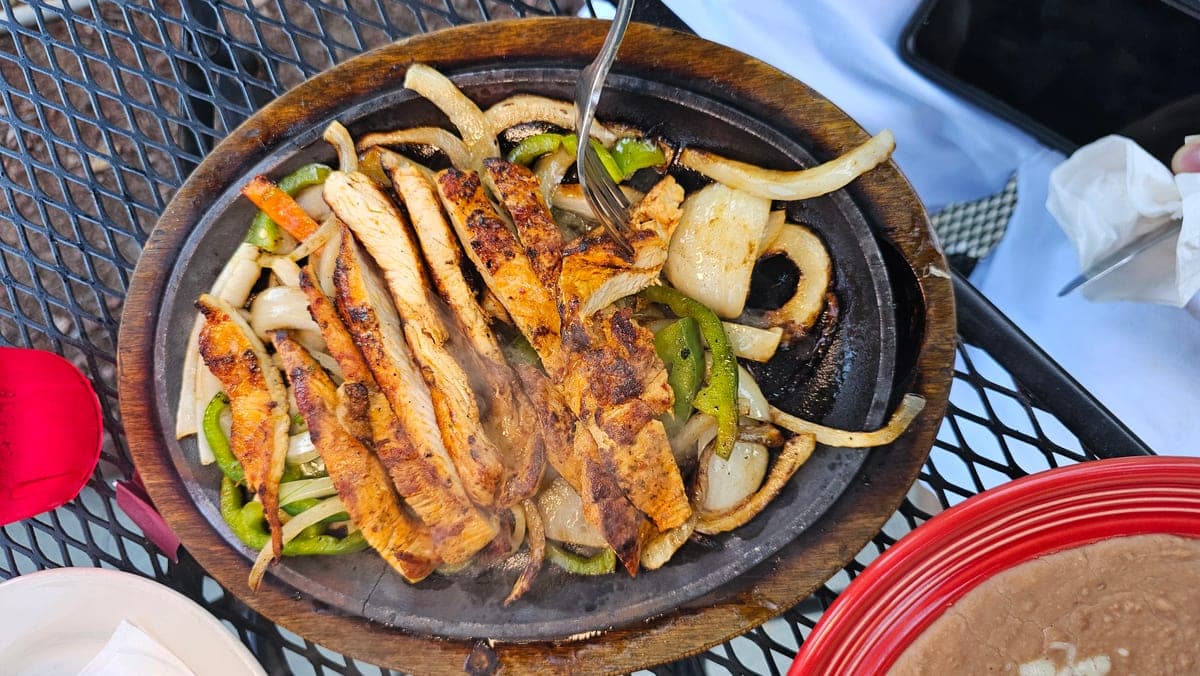
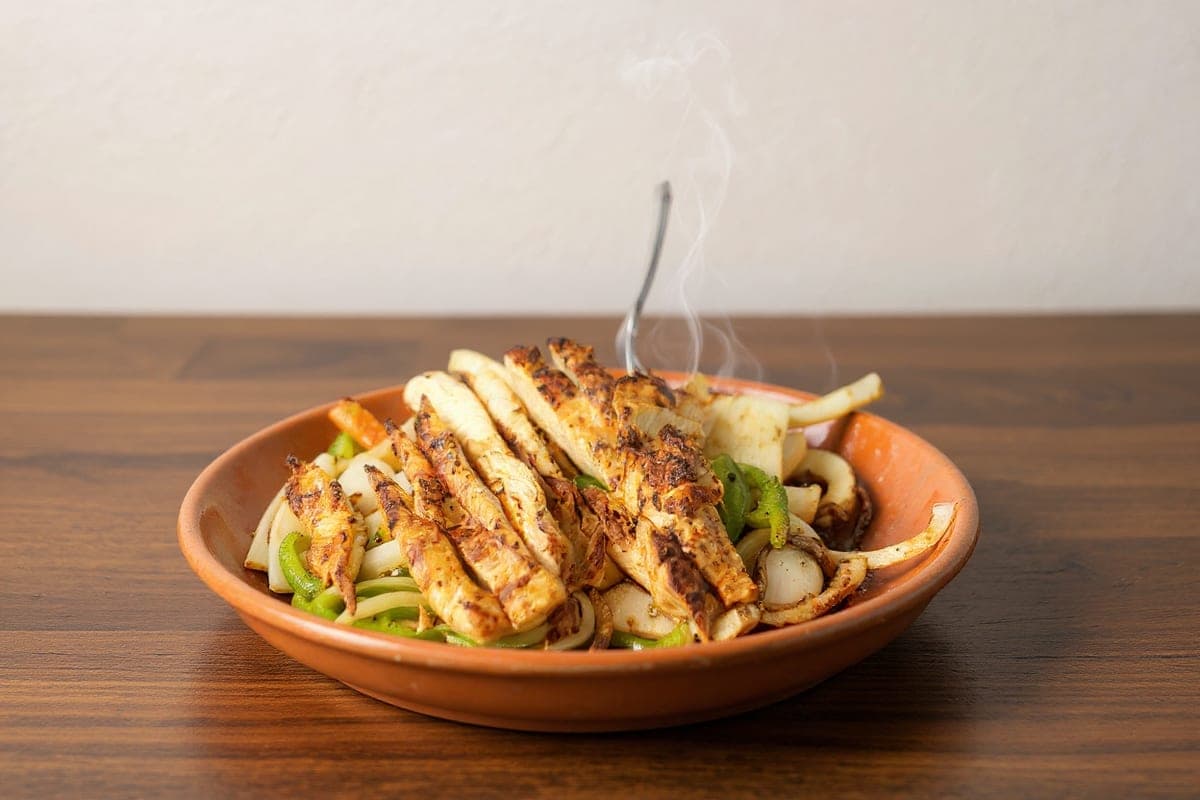
| A vessel that is part of the dish | A sizzling fajita skillet swapped for a bowl | Over the line |
| Portion size | Six wings shown as ten | Over the line |
| Ingredients | Garnish, sauce, or a side that was not there | Over the line |
| The dish itself | Generated from a text prompt, no photo taken | Over the line |
The awkward cases are the vessel and the portion, and they are where well-meaning tools drift. A tool that quietly adds a garnish, because generated food usually looks better with one, has changed what the customer receives. So has one that moves a sizzling skillet dish into a bowl.
An ordinary plate is different, and DoorDash has settled it. Its AI Replate changes the dinnerware and keeps the food, the quantity and the portion, and DoorDash labels those photos for customers. Delivery food arrives in a container whatever the photo shows, so a clean plate is presentation, not a promise. Uber Eats and Grubhub publish no rule about dinnerware either way. The line I hold is the vessel that is part of the dish: a sizzling skillet, a stone bowl, a branded box. Swap one of those and the customer gets the right food in the wrong thing.
This is the test I use on our own output: if the dish that arrives would make a customer feel misled, the result gets thrown out, no matter how good it looks.
Here is that test failing, on our own pipeline.
The photo that was taken
Over the line
What happens if you cross it?
Two separate risks, and the second one is worse than the first.
The platform rejects the photo
Annoying, recoverable, and you find out quickly. You get a rejection reason by email and in the Merchant Portal, and you upload something else.
Customers notice
This is the one that does damage, because you often do not find out until it has already cost you.
In July 2026 a San Francisco cafe called Grind & Unwind put AI-generated food images on a window board. The storefront was defaced with graffiti. The owners removed the board, repainted at a cost of around $700, and replaced it with LED lights and a display of their actual pastries. Commenters online called it false advertising and picked the images apart in detail, down to bread that looked like reptile skin.
The owner's own reaction is the part worth sitting with: "I want people to come to our restaurant, but, like, why is this such a big deal that it influences people on such an intense level?"
It is a fair question, and the answer is that a menu photo is a promise about what arrives. People react to a broken promise about food more strongly than the person making it usually expects.
Do AI food photos actually perform worse?
The honest answer is that the research points in two directions, and anyone selling you something who tells you otherwise is picking the half that suits them.
Against generated food
a study published in Scientific Reports in August 2026 had 87 participants rate 60 pairs of AI-generated and real food images. It found that AI-generated food images were "perceived as significantly less realistic and elicited lower willingness to eat compared with their real counterparts." Ratings of healthiness and calorie content did not differ meaningfully. So AI reproduced the nutritional read of the food but not the appetite.
For generated food
a 2024 University of Oxford study reported the opposite-sounding result, that AI-generated food images can look more appetizing than real ones when viewed on their own.
Both can be true. An image can be more attractive in isolation and less convincing when a person is deciding whether to trust it, and separate work on the uncanny valley in food imagery points the same way: the closer a synthetic image gets to real, the more a small wrong detail costs it.
Which of the two you get is decided by context, and a menu is the worst possible context for the first effect. The customer is not admiring the image. They are about to pay for the thing in it, and then compare.
What should I do instead?
Photograph the actual dish, then fix the photograph rather than the food.
A phone photo taken near a window, with the dish framed with margin on all four sides, gives you something real to work from. From there, lighting, background, color and crop are all fair game, and they are what separates a usable menu photo from an unusable one. The dish stays exactly what you served.
If you want the platform sizes handled at the same time, that is a separate problem and it has its own guide.
Frequently asked questions
Does DoorDash reject AI-generated food photos?
Yes. DoorDash requires real photos of the actual item, not an idealized or generic version, and its virtual-brand rules state that evidently AI-generated images are not permitted. In practice its review rejects generated images with a notice saying the photo appears to be AI-generated. The underlying rule is that the photo must show what the customer will actually receive.
Can DoorDash tell if a photo was made with AI?
It can. DoorDash does not publish how its review works. In one restaurant account in September 2026, 16 of 20 images generated with Google Gemini were rejected as appearing AI-generated, and every rejected file carried a Google-signed Content Credentials label declaring it. Four were not rejected, so the review is not perfect, but a generated photo is a risk every time it is uploaded.
How do I check if a photo is labeled as AI-generated?
Read its Content Credentials, the signed label many AI tools write into the image file. The free Is This Food Photo AI? check on this site reads it in your browser without uploading the photo, and the free Content Credentials Verify site shows it too, including who signed it and whether it declares AI generation. No label is normal for phone photos and does not prove a photo is real, because exporting through some design apps removes the label.
But doesn't DoorDash have its own AI photo tools?
It does, and that is not a contradiction. Since May 2026 its AI Photo Enhance tool has three modes, AI Retouch, AI Replate and Match Style, and DoorDash says each keeps the food itself unchanged. AI Replate does change the dinnerware, and DoorDash labels such photos "AI-enhanced" for customers. Enhancing the photograph is allowed. Generating the food is not.
Is AI photo enhancement allowed on delivery apps?
Enhancement that changes lighting, background, framing and color is consistent with what DoorDash publishes about its own tools. What the rules target is a changed dish: a different portion, added ingredients, or food generated from a prompt rather than photographed. A different plate is presentation, which DoorDash's own AI Replate does. The exception is a vessel that is part of the dish, such as a sizzling skillet.
Can customers actually tell if a food photo is AI-generated?
Often, yes. A 2026 study in Scientific Reports found AI-generated food images were rated significantly less realistic and produced lower willingness to eat than real photos of the same foods. In practice people also compare the photo to what arrives, which is a harder test than spotting the image cold.
My photos are real but they look AI-generated. Why?
Usually over-processing. Heavy smoothing, saturation pushed too far, an impossibly clean background, or lighting with no visible direction all read as synthetic even when the food is real. Pulling the edit back until the photo looks like a photograph normally fixes it.
What about using a stock photo of a similar dish?
Worse than AI on two counts. It is not your dish, so it fails the representation rule, and it is usually a copyright problem. DoorDash lists copyright as its own rejection reason, and Grubhub checks by looking for the image in a reverse image search.
Real client work
A real restaurant's takeout photo, now live on DoorDash
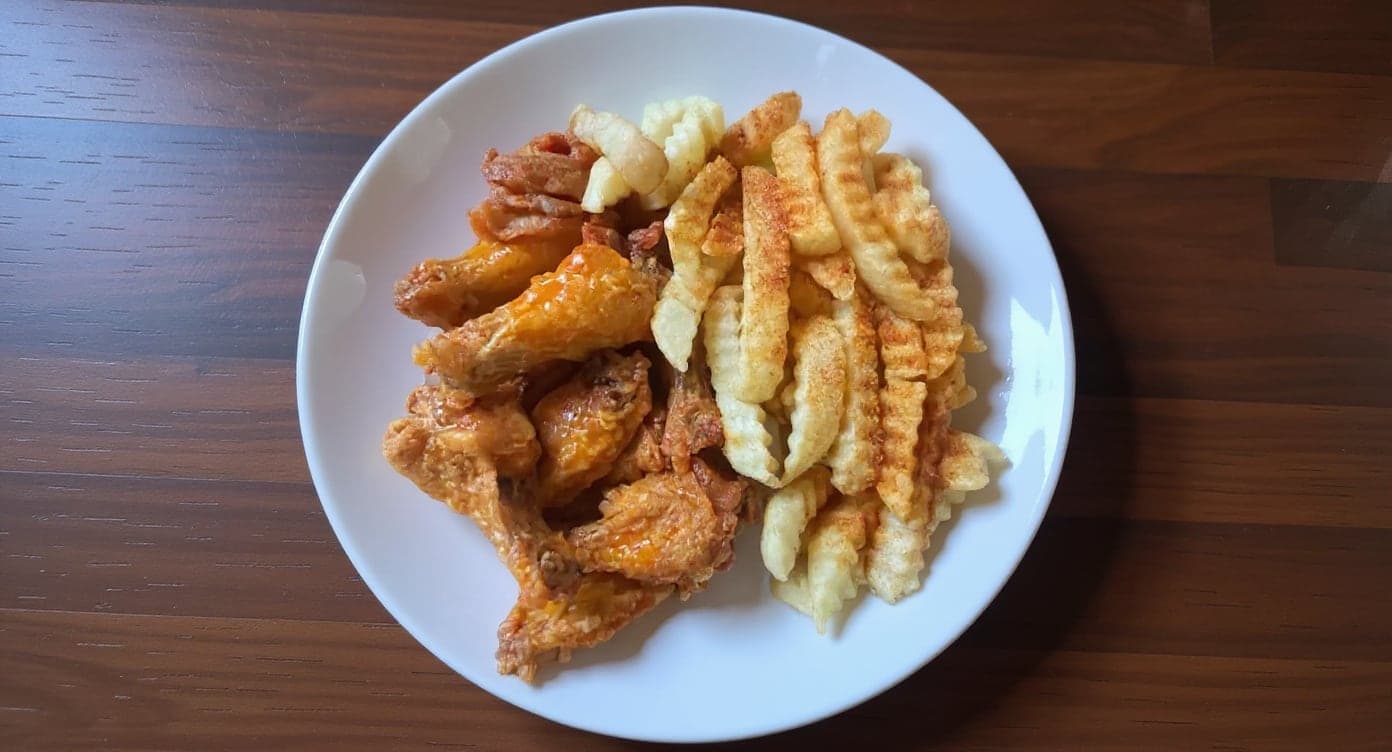
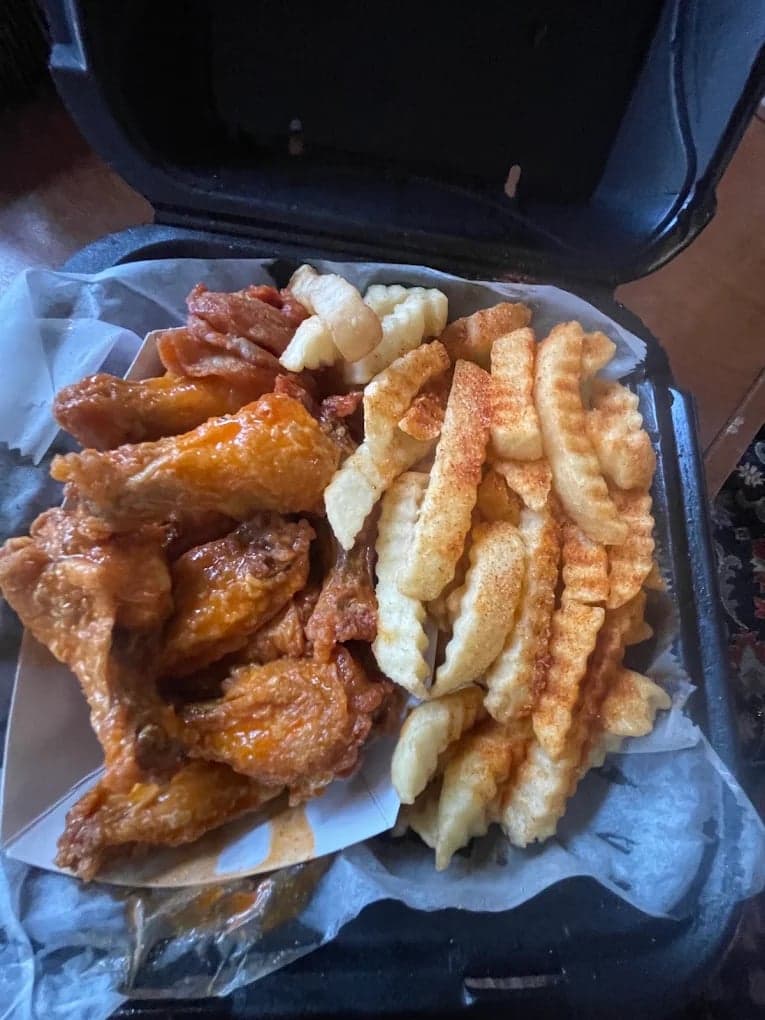
It genuinely looks like we hired a professional photographer. Thank you!
5 photos free · No credit card · No watermark
Keep reading

Su Lee
Founder, MenuPhotoLab · Atlanta, Georgia
I have photographed Atlanta restaurants for six years as a food creator, and for the last two my sister and I have run SocialLee Agency, shooting and uploading menus for independent restaurants around metro Atlanta.
Sources (12, each with the date it was read)
- DoorDash, Why your menu photos were rejected, read
- DoorDash, Virtual Brand Quality Requirements (evidently AI-generated images not permitted), read
- Content Credentials Verify, free inspector for the signed label in an image file, read
- OpenAI Help Center, Provenance signals (Content Credentials, SynthID) in OpenAI-generated content, read
- Google DeepMind, SynthID (watermark designed to withstand cropping, filters and compression), read
- DoorDash newsroom, AI-powered tools for online menus (announced 2025-04-09), read
- DoorDash, AI-powered merchant tools, 4 May 2026 (AI Retouch, AI Replate, Match Style), read
- DoorDash Help, Menu photos with smart photo tools (AI Photo Enhance, moderation of enhanced photos), read
- DoorDash Help, Photos FAQ for customers (what the AI-enhanced label means), read
- PetaPixel, San Francisco restaurant defaced over AI-generated food photos (2026-07-22), read
- Scientific Reports via News-Medical, AI food images rated less realistic and lower willingness to eat (2026-08-17), read
- University of Oxford, AI-generated food images look tastier than real ones (2024-03-15), read
Platform requirements change. This page carries the date each source was last checked.
Not affiliated with DoorDash, Uber Eats, Grubhub, Google.